
Balancing Welfare Obligations and Administrative Practicality
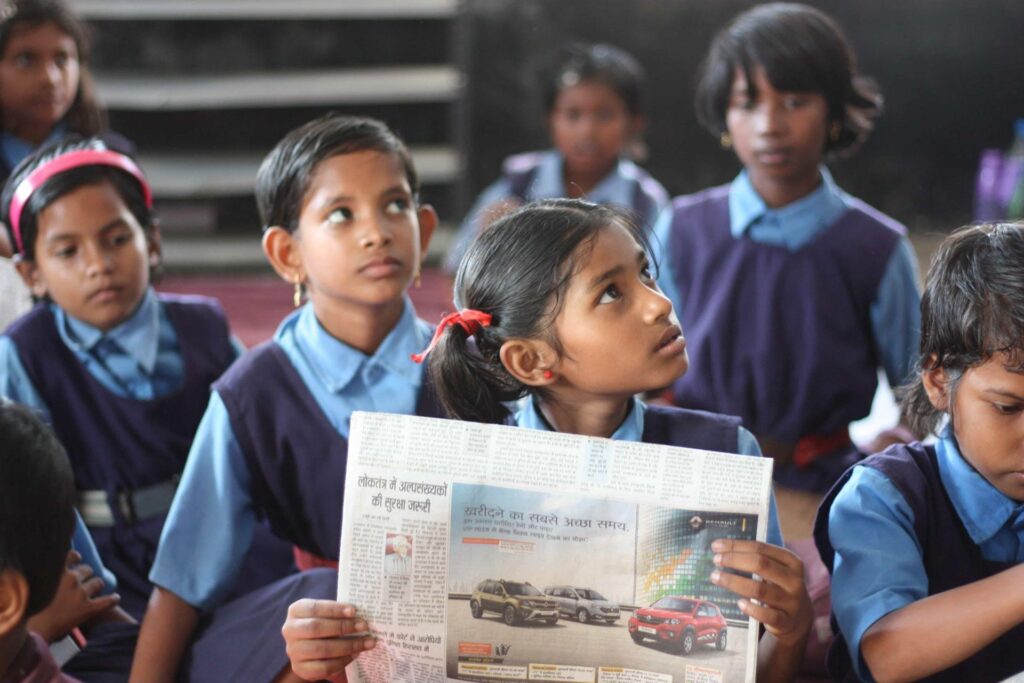
The Delhi High Court, in a significant ruling delivered on 23 January 2026, upheld the Government of NCT of Delhi’s policy of providing school uniform assistance through Direct Benefit Transfer (DBT) instead of supplying uniforms strictly in kind to students belonging to the Economically Weaker Section (EWS) and Disadvantaged Group (DG) categories.
The judgment clarifies the scope of the Right of Children to Free and Compulsory Education Act, 2009 (RTE Act) and draws an important line between statutory obligation and administrative feasibility.
Case Details
Case Title: Justice For All v. Government of NCT of Delhi
Case Number: W.P.(C) 3684/2013 with Review Petition No. 475/2025
Court: High Court of Delhi at New Delhi
Coram:
- Justice Devendra Kumar Upadhyaya, Chief Justice
- Justice Subramonium Prasad
Date of Judgment: 23 January 2026 DEHLI HIGH COURT 23-01-2026
Background of the Case
The original writ petition was filed in 2013 seeking strict enforcement of the RTE Act, particularly the obligation of the State to ensure that children admitted under the EWS and DG categories receive free textbooks, uniforms, and study materials.
Over the years, the Court passed several directions to ensure compliance. However, concerns arose when it was noticed that instead of supplying uniforms physically, the Government had begun providing cash subsidies.
This led to objections by the petitioner, who argued that the RTE Act mandates uniforms in kind, not monetary assistance.
Why the Review Petition Was Filed
In April 2023, the Delhi High Court had passed directions questioning the practice of giving cash instead of uniforms.
Subsequently, the GNCTD filed a review petition, later treated as an application for modification, citing developments after 2023. The Government placed on record:
- Cabinet Decision dated 10 May 2025
- Policy Order dated 10 June 2025
These decisions formally approved DBT as the mode of uniform assistance, citing serious logistical and operational difficulties in supplying uniforms physically.
Government’s Justification for DBT Policy
The Government explained that supplying uniforms in kind posed multiple challenges:
- Each school has different uniform designs and colour combinations
- Measuring every child individually is impractical
- Procurement through the GeM portal is time-consuming
- Stitching and distribution before the academic session is difficult
- Risk of delays, inefficiency, and litigation
To address these issues, the Government enhanced the uniform subsidy amount and opted for direct cash transfer, ensuring students could purchase uniforms on time.
Legal Issue Before the Court
Whether the RTE Act and Delhi RTE Rules, 2011 mandate compulsory supply of uniforms in kind, or whether providing financial assistance through DBT satisfies the statutory obligation.
The Delhi High Court examined:
- Section 12 of the RTE Act
- Rule 11 of the Delhi RTE Rules, 2011
- Previous judicial directions
- Government policy documents and cabinet notes
The Court held that:
- The law mandates provision of uniforms, but does not prescribe the mode
- There is no statutory requirement that uniforms must be supplied only in physical form
- The Government’s decision was taken after due consideration and was not arbitrary
The Court acknowledged that the practical difficulties cited by the Government were genuine, and DBT would ensure timely availability of uniforms to students.
Judicial Restraint in Policy Matters
Relying on multiple Supreme Court precedents, including:
- Fertilizer Corporation Kamgar Union v. Union of India
- Directorate of Film Festivals v. Gaurav Ashwin Jain
- Jacob Puliyel v. Union of India
the Court reiterated that courts should not interfere with policy decisions unless they are:
- Arbitrary
- Mala fide
- Unconstitutional
- Contrary to statutory provisions
None of these grounds were established in the present case.
Final Decision of the Court
The Delhi High Court:
- Upheld the Policy dated 10 June 2025
- Modified the earlier order dated 13 April 2023 to the extent it insisted on uniforms in kind
- Directed the GNCTD to ensure that adequate funds are transferred to beneficiaries well in time
The review petition was accordingly disposed of.
Why This Judgment Matters
This ruling is important because:
- It affirms administrative flexibility in implementing welfare laws
- It recognises that effective delivery, not rigid form, is the objective of social legislation
- It reinforces the principle of judicial restraint in policy matters
- It sets a precedent for DBT-based welfare implementation under education laws
Conclusion
The Delhi High Court’s decision strikes a pragmatic balance between children’s rights under the RTE Act and the operational realities of governance. By validating DBT as a lawful and efficient mechanism, the Court ensured that welfare objectives are met without imposing impractical burdens on the administration.
The judgment stands as a reminder that the spirit of the law is to ensure access and dignity, not to enforce inflexible procedures.